
Demonstrating long-range medical drone delivery in the Marshall Islands.
Five KITE delivery missions, a 248 km return flight and 15 Marshallese participants trained during J85’s Project Island Lifeline.
A faster connection for medical supplies.
Across Kwajalein Atoll, in the Marshall Islands, distance and weather shape access to medical supplies. Boat transport can take hours, with rough water making travel difficult and daylight determining whether a delivery can happen that day or must wait until morning.
To assess how new technology could improve medical deliveries, J85, the Science and Technology Division of U.S. Indo-Pacific Command, organised Project Island Lifeline. ArgenTech in partnership with Kite Aero took part with the KITE long-range fixed-wing drone.
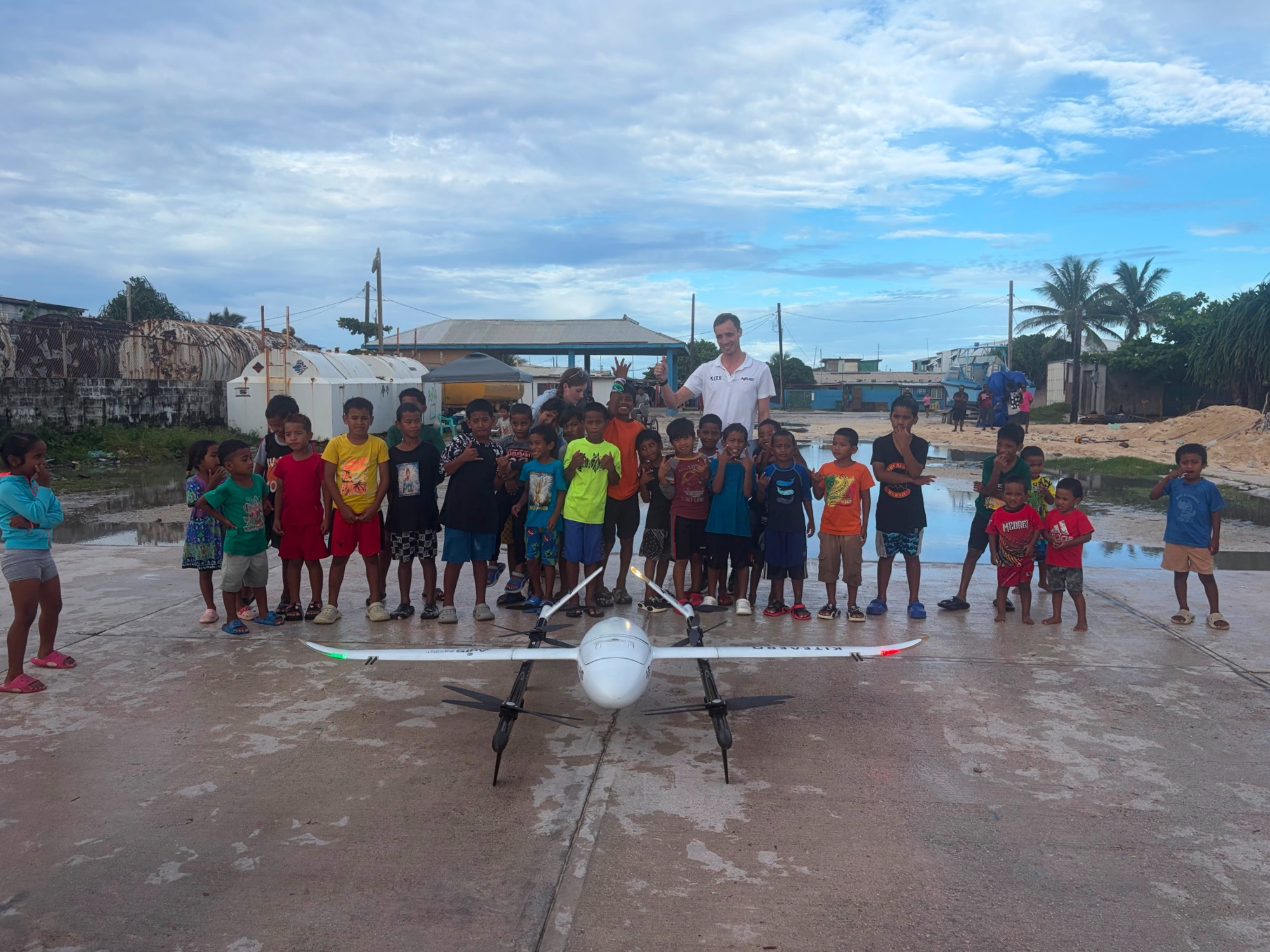
Taking the technology into the field.
Following an initial demonstration in Hawai‘i, ArgenTech and Kite Aero were selected as finalists for the field evaluation at Kwajalein. The task was to demonstrate deliveries from the central hospital to three locations around the world’s largest atoll.
The KITE combines long-range flight with vertical takeoff and landing, allowing the team to reach delivery sites without runway infrastructure. AXIOM provided the drone operations software for route preparation and flight management.
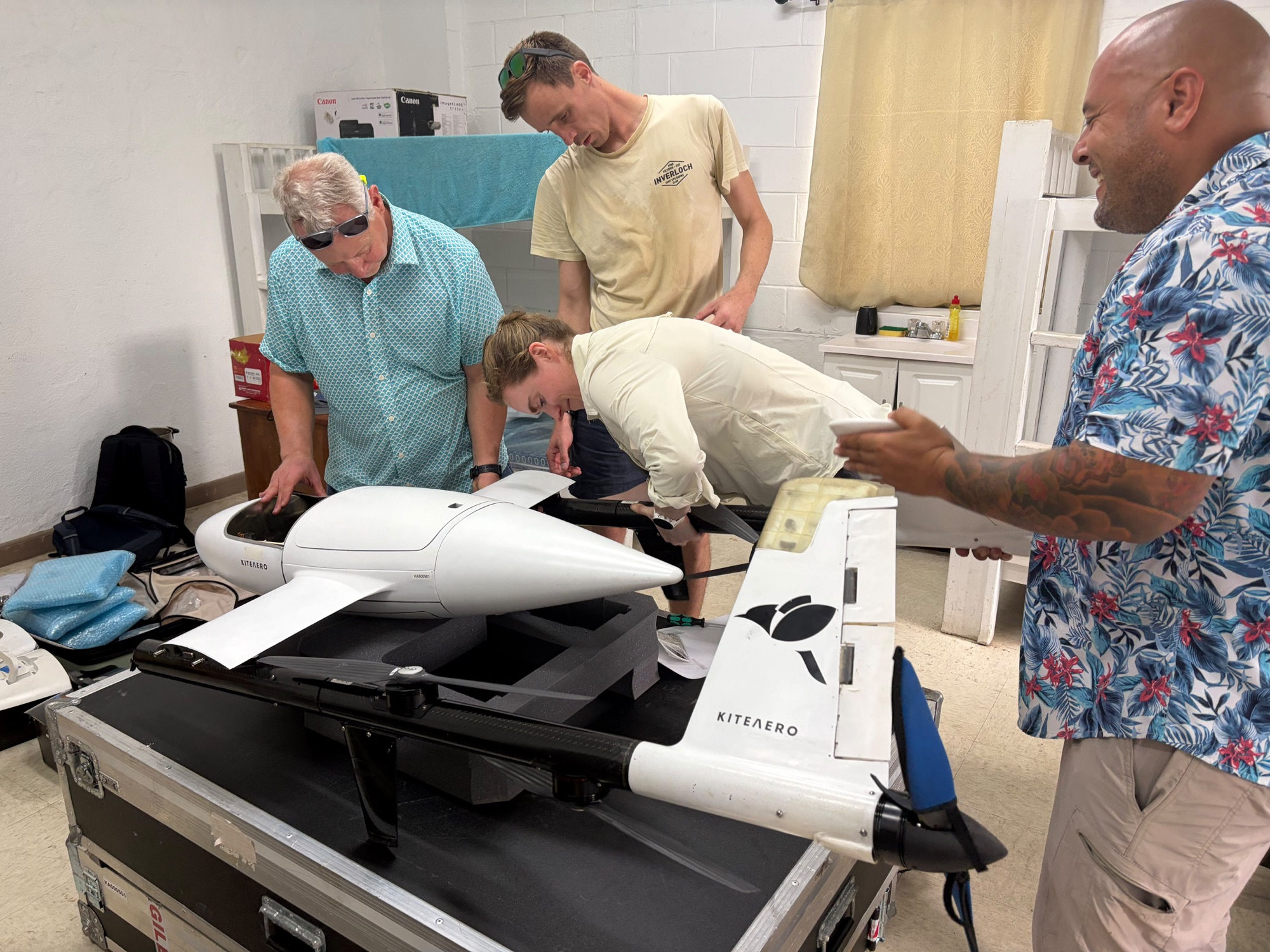
Hours by boat, minutes by air.
The two longer routes extended approximately 80 km and 122 km each way, meaning that they could meet the range required to cross the atoll.
During the deployment, a storm-affected boat crossing took approximately five hours through rough water, versus the KITE covering the route in 45 minutes.
“They were in this boat for probably at least five hours. And then we flew it in 45 minutes.”

More than flight time.
For medical logistics, the advantages extend beyond flight time.
Deploying quickly in demanding conditions.
“There was very heavy rain, strong winds and temperatures well over 30 degrees (Celsius) every day, with very high humidity. It’s a very harsh, salty environment. That’s partly why we did the testing there, and everything worked.”
With forecasts offering limited local detail, the team checked conditions with people at the destinations before flying. KITE can operate in winds of up to 35 knots, helping it handle the strong winds encountered across the atoll.
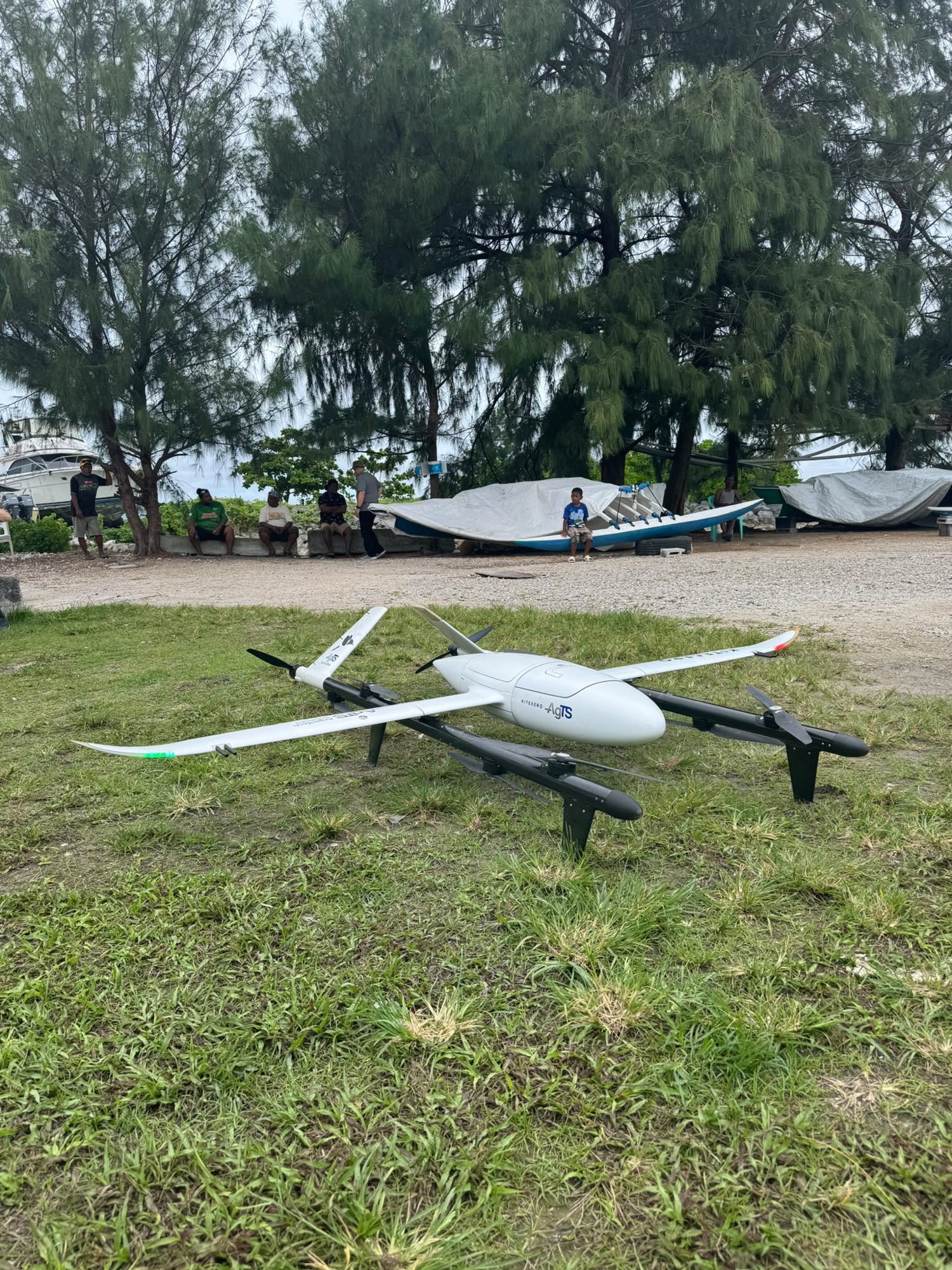
Two further capabilities.
The trial demonstrated two further capabilities.
Rapid destination preparation
The team reported being ready to fly to a new location within 15 minutes of arrival, demonstrating how quickly it could prepare an additional delivery site. “If there’s an emergency, how long is it going to take to get it ready? We demonstrated that it’s 15 minutes of work,” says Aidan.
Automatic safety response
A poorly secured landing tarp billowed and caught around the KITE during takeoff. The aircraft detected the interference, aborted the takeoff and returned to the ground.
“You can’t control every single variable. The aircraft itself behaved as we would hope, as robust and reliable as it is designed to be.”
Building skills with the local community.
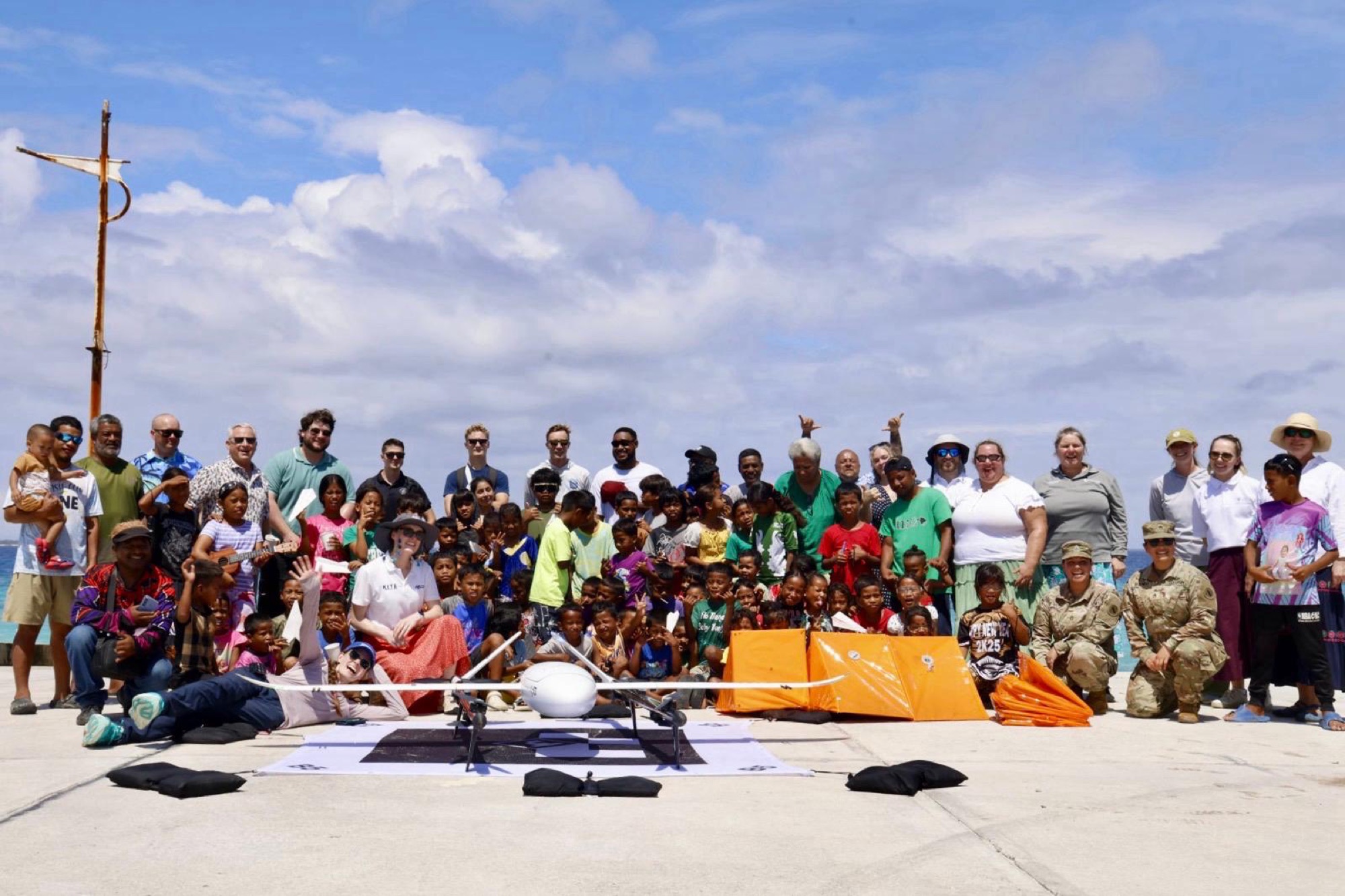
The ArgenTech/Kite Aero team trained 15 Marshallese participants through online and in-person sessions. Training covered route creation in AXIOM, aircraft inspection, payload handling and landing-area preparation.
AXIOM is designed for straightforward operation with minimal training. Participants were highly engaged, and Aidan was impressed by how well they recalled specific details from the online sessions.
That interest and engagement extended to the wider community. Residents gathered to watch flights and ask questions, while a community day offered a closer look at the technology. Aidan described a warm reception and said the mayor saw clear value given the distances and weather involved.
“It’s not just about providing something useful. It’s also about building skills and expertise.”
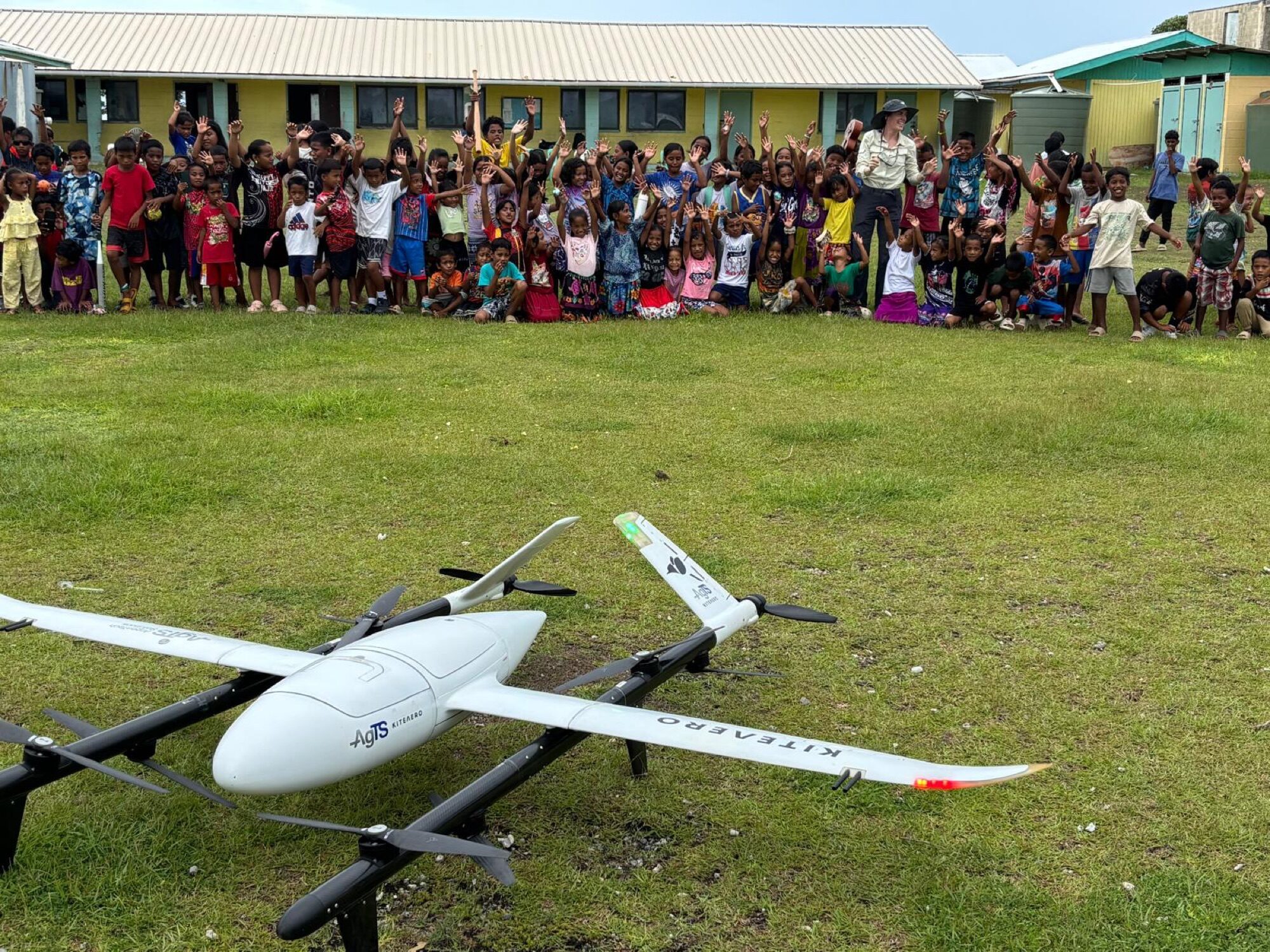
Completing every assigned mission.
The team completed all five delivery missions across three destinations. Its longest delivery covered 248 kilometres on the return trip, a company record at the time.
A foundation for local operation.
The longer-term goal is a medical delivery network run by Marshallese teams, with support from ArgenTech and Kite Aero. AXIOM’s ability to manage multiple aircraft simultaneously could support expansion while keeping costs per flight down.
The opportunity extends beyond the Marshall Islands. J85 plans to share the findings with other Pacific partner nations facing similar logistics needs. At Kwajalein, the trial demonstrated delivery capability and began building the local skills a future service would need.
“It allows you to be more agile with your supply chain, to respond more quickly and more dynamically to needs anywhere around the atoll.”
Kite Aero is an Australian drone logistics technology company delivering the KITE fixed wing UAS platform and AXIOM drone operations software suite to operators worldwide. Kite Aero’s products provide the range, reliability and compliance capability that life-critical BVLOS drone operations demand.