
Medical drone delivery for rural healthcare.
How a Texas born consortium is using a long range fixed wing drone to close the gap in rural American healthcare.
The $12,000 problem.
When a potential organ donor is identified at a rural hospital in southwest Missouri, a matching sample, a small vial of blood or tissue, needs to reach the transplant centre in St. Louis as fast as possible. Today that means chartering a King Air aircraft at roughly USD $12,000 per flight to move a single sample. The cost is staggering. The time it takes is worse.
From the far corners of Missouri to St. Louis, the current process, blood draw, ground courier to the airstrip, charter flight, ground transfer on the other end, can take upwards of two and a half hours. For a patient on the transplant waiting list, every one of those minutes matters.
“Across the United States, getting a time-sensitive samples from a donor hospital to a transplant centre can take hours and cost thousands. That’s not a logistical inconvenience, it’s a barrier to people getting the care they need.”
Valkyrie UAS Solutions (Valkyrie) cultivated a public-private partnership to help overcome a Rural Zip Code Risk Factor that medical drone delivery could solve this problem, not in a lab, not in a pitch deck, but on the ground, across the vast rural corridors of Texas and Missouri where conventional healthcare logistics consistently fails the communities that need it most.
Why fixed wing. Why KITE.
Before settling on the KITE fixed wing delivery drone platform, the Valkyrie evaluated multiple UAS solutions over several years. The fundamental constraint was distance. Quadcopter platforms, including those used by major commercial operators, simply could not cover the 50 to 100 mile corridors that define rural US healthcare logistics. Only a long range drone with fixed-wing efficiency could meet the mission profile.
“We spent years evaluating platforms. The reality is that no quadcopter on the market can cover 90 miles with the payload we need. The KITE gave us the range, the speed, and the modularity to actually match our mission profile.”
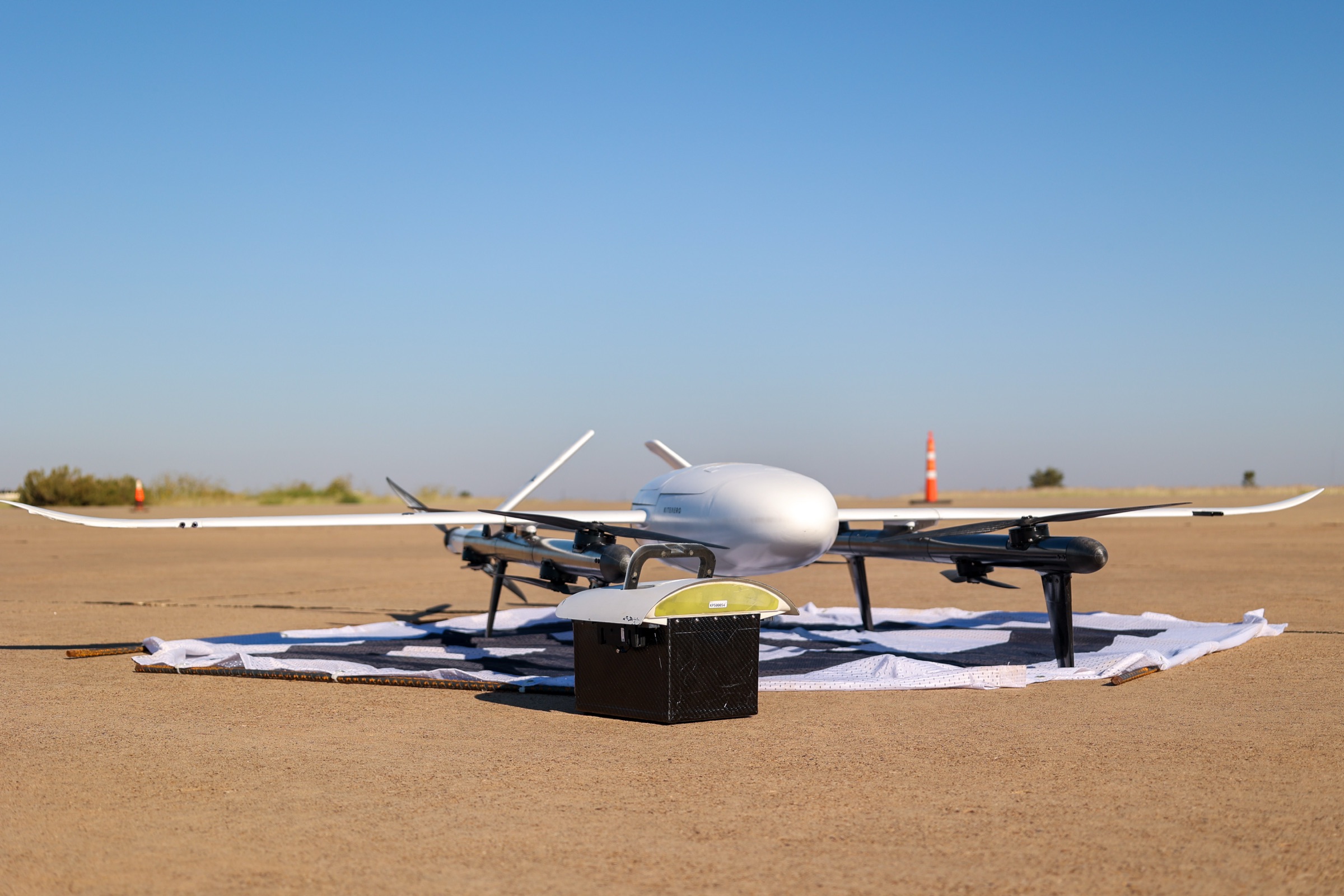
Valkyrie first encountered the platform under its previous identity as Swoop Aero, drawn by the operational proof accumulated over six years of healthcare delivery in Africa. When the platform transitioned to Kite Aero, Valkyrie backed the new entity as a strategic investor, deepening a relationship that had already demonstrated its value in the field.
“We’d already seen what the platform could do across six years of healthcare delivery in Africa. When the opportunity came to back Kite Aero, it wasn’t a leap of faith, it was doubling down on something we’d already validated.”
First flights: organ procurement in Missouri.
Valkyrie’s first major operational deployment is a partnership with Mid-America Transplant, the organ procurement organisation responsible for nearly all of Missouri and a significant portion of Illinois. Their medical drone delivery programme targets the logistics of moving matching samples between donor hospitals and transplant centres, a process that has historically relied on King Air charters.
On 1 April 2026, timed to coincide with US National Gift of Life Month, Valkyrie conducted its first BVLOS demonstration flight along the I-44 corridor, a heavily trafficked low-altitude airspace route running from southwestern Missouri to St. Louis.
The early results speak for themselves. Transport costs drop from approximately 90% reduction per drone mission, with the added efficiency of compounding multiple samples on a single flight. Delivery times are compressed by one to two hours, turning what was a two-and-a-half-hour ordeal into a dramatically shorter window. The model effectively demonstrates drone as a service for healthcare logistics at scale.
For the programme’s operating partners, the case for cost and speed is already settled. The remaining focus is validating payload integrity ahead of regularly scheduled flights.
AXIOM: the software that makes it operational.
For Valkyrie, the KITE airframe and the AXIOM drone operations management software platform are inseparable. Operating along the I-44 corridor, a congested low-altitude environment shared with helicopters, crop dusters, and other UAS, demands real-time situational awareness and ironclad compliance. AXIOM delivers both, combining drone fleet management, drone compliance software, and mission planning into a single integrated system.
“Operating BVLOS along the I-44 corridor means sharing low-altitude airspace with helicopters, crop dusters, and other aircraft. AXIOM gives us real-time situational awareness and keeps us within our FAA waiver limits automatically. That’s not optional, it’s what makes the programme viable.”
Payload integrity: the final hurdle.
Speed and cost are necessary but not sufficient for medical logistics. The cargo, organ matching samples, blood products, diagnostic specimens, must arrive in precisely the condition it departed. Whether operating as a blood delivery drone or a drone vaccine delivery platform, payload integrity is non-negotiable. Valkyrie is currently implementing a purpose-built sensing package, originally designed for hospital pneumatic tube systems and adapted for drone flight.
The sensing package monitors vibration, temperature variation, and a range of environmental parameters throughout each flight, providing a chain-of-custody data record that satisfies both clinical requirements and FAA governance obligations. Integrated with AXIOM’s drone management system, validation of this capability is the final step before Valkyrie transitions to regularly scheduled commercial flights for Mid-America Transplant.
The Kite Aero team’s track record, six-plus years of drone delivery in Africa including temperature-sensitive vaccines, blood samples, and emergency medications, provides a strong evidence base. With that operational history behind the platform, Valkyrie’s leadership sees no foreseeable barrier to payload integrity once validation is complete.
Beyond logistics: building a workforce.
Valkyrie has made drone literacy and community engagement a structural pillar of its mission. In rural West Texas and the Missouri Hill Country, where awareness of drone technology and its career pathways remains limited, the Consortium actively conducts STEM education and community outreach.
The KITE platform and AXIOM’s accessible interface are central to this effort. By demonstrating that a person without an engineering background can learn to operate the system competently, Valkyrie is making the case that drone operation is a viable career path for communities historically excluded from the technology economy.
“We set out to prove that drone operations can be a real career path in communities that haven’t historically had access to this kind of technology. The response has been strong, people see this as something that belongs in their region, not something imposed on it.”
From corridor testing to scheduled flights.
KITE, by the numbers.
Six years of medical delivery.
The KITE platform’s credibility in the US is built on a long operational history of drone delivery in Africa.
That same platform now flies the corridors of Missouri and West Texas.
Kite Aero is an Australian autonomous drone technology company and manufacturer, delivering the KITE fixed wing UAS platform and the AXIOM drone operations software suite to operators worldwide. With a proven track record spanning healthcare, humanitarian, and commercial drone operations across Africa, the Pacific, and the Americas, Kite Aero provides the range, reliability, and compliance capability that life-critical drone operations demand.
Valkyrie UAS Solutions is a US-based Rural Healthcare Transportation Company dedicated to advancing medical drone delivery for rural healthcare access. Valkyrie UAS Solutions is a strategic investor in Kite Aero.